Renting an apartment in California has long meant watching electric bills climb every summer without any way to push back. Traditional rooftop solar setups require homeownership, HOA approvals, and thousands of dollars in permanent electrical work. A major regulatory shift changes that dynamic, allowing tenants to generate clean electricity right from their own balcony railings.
Plug-in solar kits, widely popular across Europe under the name balcony power plants, are now legally recognized and permitted in the Golden State. This regulatory move breaks down decades of bureaucratic friction, giving millions of apartment dwellers direct access to lower energy costs.
What Does California’s New Balcony Solar Law Mean for Renters?
The updated legislation establishes a clear legal framework for residents to purchase, set up, and operate compact solar setups without hiring contractors or securing permits from local utility companies. Historically, connecting any power source to an electrical grid required extensive utility agreements, bidirectional meter upgrades, and landlord sign-offs.
Renters are the primary beneficiaries of this change. Because these systems are entirely portable, you can mount panels with non-invasive brackets, run them for your lease term, and pack them into moving boxes when you leave. Property owners have fewer grounds to ban them outright, provided the installation meets basic electrical codes and structural safety guidelines.
How Plug-in Solar Panels Generate Power from an Ordinary Outlet?
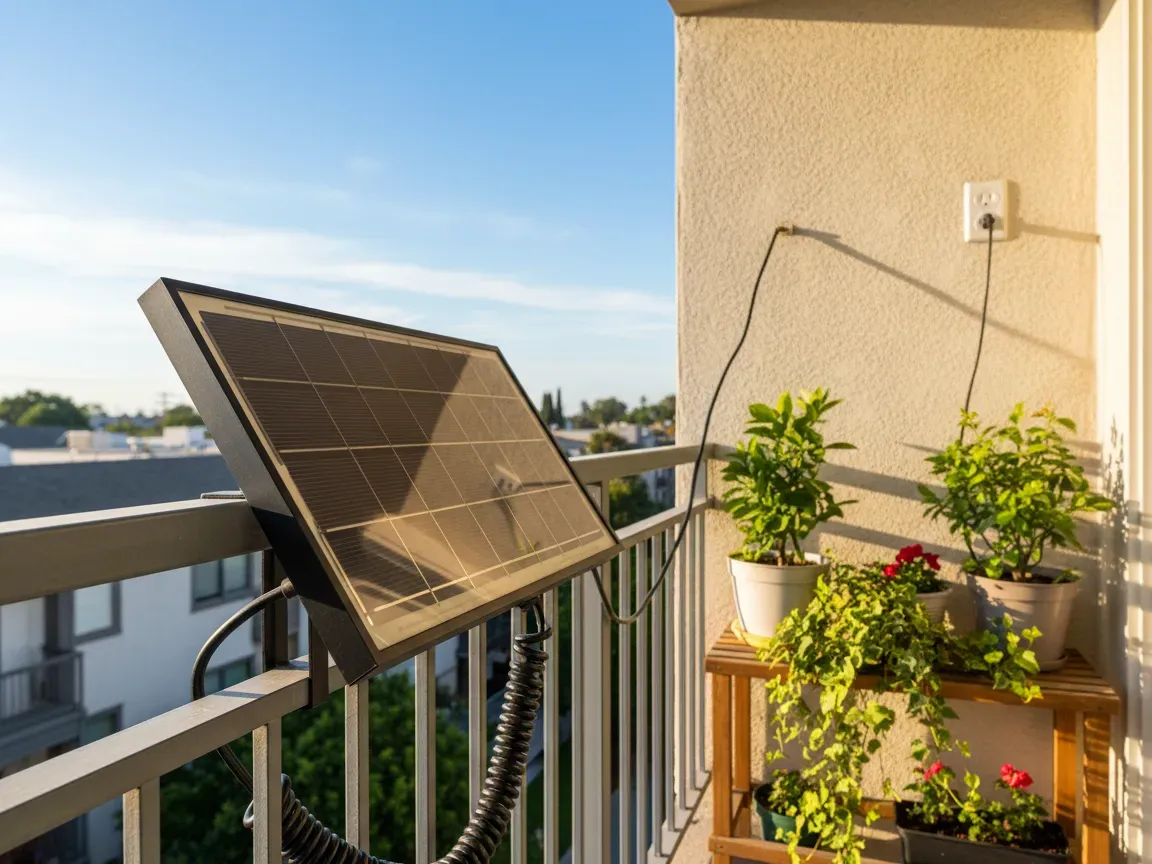
The engineering behind a balcony solar system sounds almost counterintuitive. You do not plug an appliance into the panel; instead, you plug the panel directly into a regular, grounded outdoor wall outlet.
Here is the straightforward process that makes it work:
- The photovoltaic panels capture sunlight and generate direct current (DC) power.
- A compact microinverter, mounted directly behind the panels, converts that DC electricity into 120-volt alternating current (AC).
- The AC power travels down a standard heavy-duty cord and enters your home wiring through the wall receptacle.
- Any appliances running in your apartment, such as your refrigerator, computer, or Wi-Fi router, consume that local solar energy first before drawing power from the main grid.
Electricity follows the path of least electrical resistance. When your balcony kit produces power, your household devices draw from that immediate supply. If your system generates less than you need, the grid seamlessly provides the difference.
Are Balcony Power Plants Actually Safe for Apartment Buildings?
Plugging an active power source into a standard wall socket naturally raises questions about electrical safety and fire hazards. The technology behind modern plug-in microinverters specifically addresses these concerns.
Certified balcony kits utilize anti-islanding protection. If the utility grid goes down or if someone unplugs the unit from the wall, the microinverter shuts off its power output in milliseconds. The exposed prongs of the plug carry zero voltage the moment they lose contact with the outlet, eliminating any shock risk.
Modern kits also stay within the amp limits of ordinary household circuits. By capping inverter output, these devices ensure that the combined current running through your walls never overloads wiring or trips your standard circuit breakers.
How Much Money Can You Realistically Save on Monthly Electric Bills?
Balcony solar kits are designed to offset your apartment baseload, which is the baseline amount of electricity your home uses around the clock for things like standby electronics, router equipment, and refrigeration.
A typical system equipped with one or two panels produces between 400 and 800 watts under ideal sunlight conditions. In sun-drenched regions of California, a properly angled unit can easily generate 1.5 to 3 kilowatt-hours of clean electricity every day.
Given California’s elevated utility rates, offsetting a couple of kilowatt-hours daily yields visible results. Most users see their monthly utility bills drop by twenty to fifty dollars, depending on local rates and sunlight exposure. Because quality kits cost only a few hundred dollars, many households recover their entire initial investment within two to three years.
What Should You Check Before Buying Your First Balcony Solar Kit?
Before placing an order for a new system, you need to verify a few physical details about your living space. Balcony kits are simple, but they rely heavily on placement and infrastructure.
- Sun exposure: Your balcony railing or patio needs direct, unshaded sunlight for at least four to five hours each day, preferably facing south or west.
- Outlet availability: You need a dedicated, code-compliant outdoor outlet with a weatherproof cover nearby to avoid running cords through open windows.
- Inverter certification: Look for equipment certified under recognized safety standards like UL 1741, which confirms the microinverter features rapid shutdown protections.
- Mounting hardware: Choose clamp-style mounting systems that grip balcony railings securely without drilling holes into building stucco or metal rails.
Taking an afternoon to verify these details ensures your setup remains completely reversible, preventing any friction with your property manager.
The Broader Shift Toward Personal Energy Independence
Legalizing plug-in solar represents a fundamental shift in how cities approach renewable power. Instead of treating clean energy generation as a privilege reserved for single-family homeowners, the new rules acknowledge that renters can actively manage their own consumption with simple, consumer-friendly technology.
Adopting a small plug-in system gives apartment residents a direct way to cushion the impact of rising utility costs without waiting for landlords to make green upgrades. As utility rates continue to climb across the state, adding a solar panel to an apartment railing is rapidly turning into standard practice for city living.