
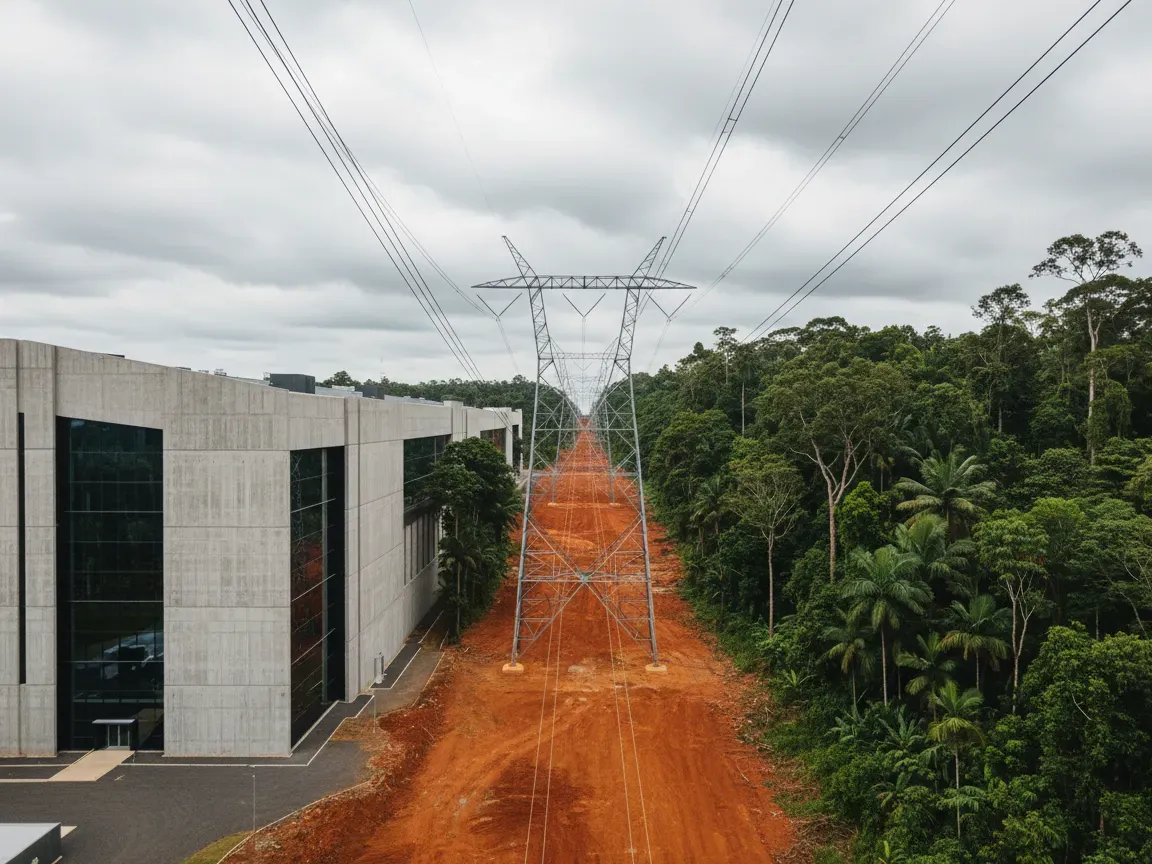
Every time you prompt an artificial intelligence tool to draft an email, edit a photo, or summarize a document, an invisible chain reaction unfolds thousands of miles away. While AI appears weightless and clean on our screens, the computational power behind it requires massive physical infrastructure that consumes staggering amounts of natural resources.
To sustain this rapid expansion, American tech giants are shifting critical infrastructure to the Global South. In the Philippines, the rush to construct hyperscale data centers and secure industrial utility supplies directly encroaches on vulnerable ecosystems and ancestral territories. Understanding the true environmental price of artificial intelligence starts with looking beyond the cloud to the communities bearing the cost.
The Invisible Footprint Behind Everyday AI Queries
Generating an image or interacting with an advanced language model requires substantially more electricity than running a standard web search. Massive server clusters operate around the clock, crunching complex algorithms and generating immense heat. Cooling these facilities demands millions of gallons of freshwater alongside steady power grids.
Because domestic grids in the United States face strain and rising costs, corporations increasingly outsource operations abroad. Tech conglomerates establish agreements in developing nations where regulatory hurdles are lower and real estate is cheaper. This dynamic creates a hidden ecological rift, exporting the resource drain of Western digital conveniences to communities that benefit least from the technology.
How Big Tech Infrastructure Threatens Indigenous Lands in the Philippines?
The Philippines has emerged as a prime hub for regional data centers and supportive industrial expansion. However, clearing land for heavy infrastructure, access roads, and energy substations frequently encroaches on ancestral domain areas. Indigenous populations find their generational way of life sidelined in favor of high-tech development corridors.
The Aeta community, one of the oldest Indigenous groups in the country, faces acute disruption from this wave of modernization. Projects built to accommodate tech expansion alter local river systems, flatten forested hills, and lead to displacement. Despite legal frameworks intended to protect ancestral domains, rapid corporate investments often bypass thorough community consent, putting ancestral heritage and cultural survival at severe risk.
Critical Resources at Risk from Skyrocketing Water and Energy Demands
Data centers cannot function without constant utilities, creating sharp competition for essential survival resources in local communities:
- Water diversions: Cooling systems require vast quantities of clean water, frequently drawing from aquifers and rivers that nearby villages depend on for drinking, sanitation, and farming.
- Energy instability: Diverting large portions of the electrical grid to prioritize uninterrupted server uptime drives up local utility rates and worsens regional blackouts.
- Soil and ecosystem degradation: Intensive grading and heavy construction strip away protective topsoil, increasing the risk of landslides during monsoon seasons and harming biodiversity.
When foreign facilities monopolize clean water and grid stability, surrounding rural populations absorb the environmental fallout while corporate balance sheets remain insulated.
Balancing Technological Innovation with Global Environmental Justice
Modern innovation cannot be considered progressive if it relies on colonial patterns of resource extraction. Big Tech companies frequently publish ambitious sustainability targets, boasting about carbon offsets and green certifications. Yet these corporate metrics rarely account for the physical disruption inflicted on Indigenous communities living near relocated supply chains.
True accountability demands rigorous supply chain transparency. Tech developers must respect the principle of free, prior, and informed consent before breaking ground on ancestral lands. Independent ecological audits must measure the exact water, land, and energy impacts of outsourced data facilities, ensuring that local populations hold veto power over projects that endanger their survival.
Simple Steps to Minimize Your Personal Digital Footprint
While corporate accountability is the primary solution, individual digital habits also influence daily energy demand across the global network:
- Limit redundant generative queries: Avoid using complex AI models for straightforward tasks that can be accomplished with a simple dictionary or basic offline tools.
- Clean up unused digital storage: Regularly delete outdated cloud backups, duplicate photos, and redundant files to reduce the overall storage volume hosted on remote servers.
- Adjust media streaming settings: Lower video streaming resolution on background devices, and disable autoplay features across web browsers and social media platforms.
- Advocate for digital ethics: Support organizations pushing for environmental transparency and Indigenous rights protections within the global technology sector.
Every intentional choice helps curb the relentless demand that drives data facility expansion.
What Does a Truly Sustainable Tech Future Look Like?
A genuinely sustainable digital landscape requires an absolute decoupling of computational growth from human exploitation. It means building decentralized, energy-efficient models that prioritize environmental preservation over sheer scale and convenience. Innovation should serve humanity without displacing vulnerable people or exhausting precious freshwater reserves.
Progress that costs communities their land, cultural identity, and essential water supplies cannot be considered advancement. Until global technology firms align their business strategies with human rights and ecological limits, the digital world will continue to leave deep, permanent scars on our physical planet.