
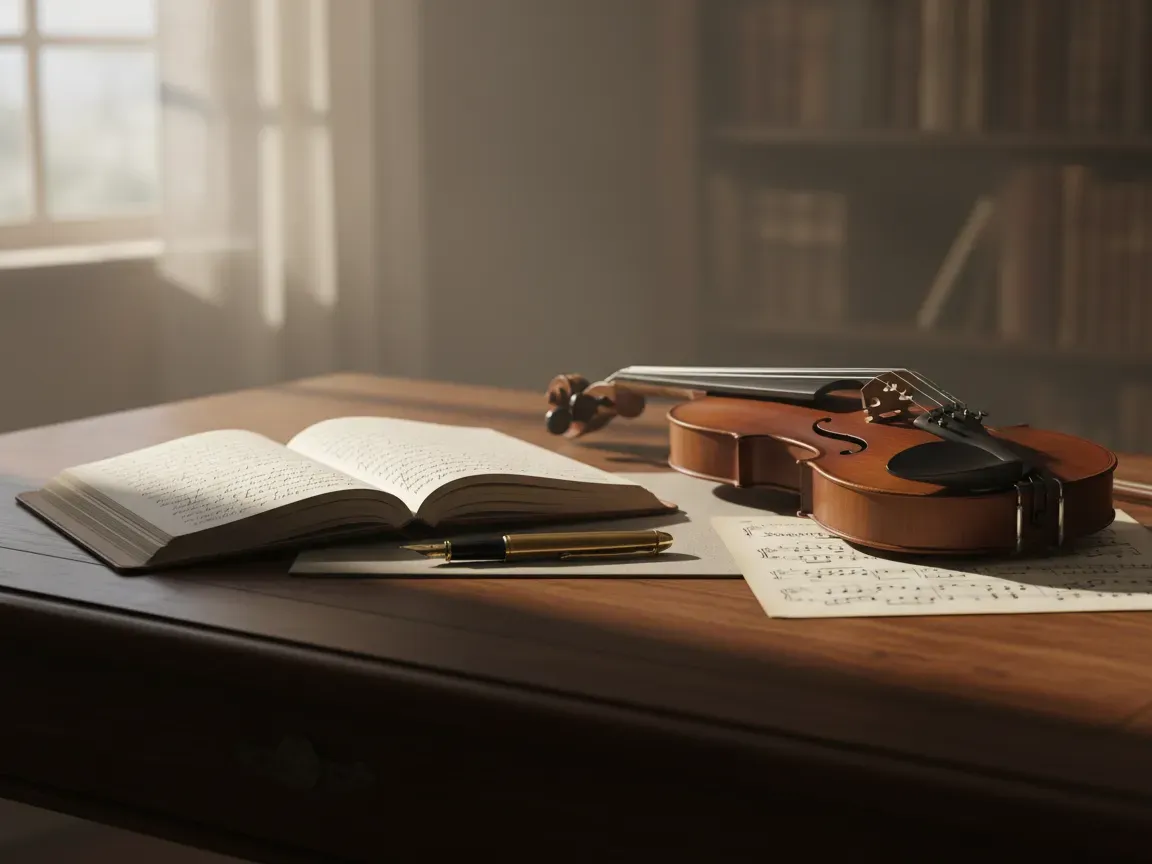
When sorrow reaches an unthinkable scale, language often collapses under the weight of direct experience. Writers facing profound trauma frequently discover that straight autobiography feels either too exposing or too restrictive to convey the true texture of their pain. Award-winning author Yiyun Li confronted this exact creative threshold after enduring the loss of both of her sons.
Rather than documenting her reality through raw autobiographical testimony alone, she shifted her creative gaze. By turning toward historical fiction and the structural clarity of classical compositions, she found a way to articulate grief that ordinary prose could not hold. Her artistic journey illustrates how creative displacement allows a writer to address unspeakable pain without surrendering to its paralyzing presence.
When Memoir Fails to Capture Devastating Personal Loss?
Direct personal writing demands that an author confront facts as they happened, yet literal facts rarely account for the disorienting nature of catastrophe. When grief is recent or overwhelmingly deep, standard memoir conventions can trap a storyteller in cyclical despair. The literal details of an autopsy report, a hospital room, or an empty bedroom carry immense emotional weight, but laying them bare on the page often leads to an expressive dead end.
Memoir requires a certain level of retrospective order that acute mourning actively defies. In autobiographical prose, the narrator must explain, contextualize, and offer meaning to the reader. When life delivers a loss that offers zero inherent meaning, forcing a traditional narrative arc onto real events can feel false or cheapening. Writers frequently find that their vocabulary stalls because the vocabulary of everyday suffering feels worn out. To keep writing through disaster, the storytelling apparatus itself has to transform.
How Music Became a Refuge for Yiyun Li’s Storytelling?
When standard prose hit a wall, Li turned to music to rebuild her relationship with artistic expression. Musical compositions do not rely on denotative definitions; they operate on cadence, tempo, tension, and resolution. For Li, entering the world of sound offered an emotional vocabulary that sat completely outside the linguistic traps of daily mourning.
Music provided her with a nonverbal framework where complicated feelings could exist without being forced into rigid explanations. Melody and harmony can convey ambiguity, longing, and unresolved tension far more fluidly than declarative sentences. By immersing her thoughts in instrumental movements, she identified alternative ways to construct narrative energy, allowing the unspoken currents of loss to flow beneath the surface of her scenes.
Why Emotional Distance Unlocks Honest Creative Expression?
Writing about tragedy through an altered persona or an unfamiliar setting provides a crucial psychological buffer. Artistic displacement is not an act of avoidance or emotional cowardice; rather, it is a deliberate craft choice that grants a writer room to breathe. When a creator steps away from the first-person pronoun, several significant shifts occur:
- The constant pressure to explain personal choices or defend private actions disappears.
- Characters can say and do destructive, irrational, or morally messy things without exposing real living relatives.
- The narrative focus shifts from literal accuracy to emotional truth, allowing deeper thematic exploration.
- The writer creates safe boundaries between their internal wound and the external reading audience.
Historical settings, in particular, provide a broad canvas for this separation. Setting a narrative decades or centuries in the past immediately establishes an aesthetic barrier. Through that historical filter, an author can examine themes of isolation, sudden mortality, and survival while keeping their personal life shielded from public consumption.
Borrowing Rhythm and Structure from the Late 18th-Century Musical World
The late 18th century was an era characterized by rigorous classical form, balanced counterpoints, and careful pacing. By drawing on this specific musical tradition, Li found architectural blueprints to stabilize unpredictable emotions. Sonatas, quartets, and symphonies from that period rely on clear themes, variations, developments, and recapitulations.
Adopting these musical rhythms changed the movement of the prose itself. A scene could function like a quiet adagio, lingering on small sensory details to slow the pulse of the story. A burst of dialogue could mimic a brisk allegro, driving sudden tension before cutting off abruptly. This structural discipline served as a container. Intense sorrow, when poured into an organized, rhythmic framework, becomes bearable to write and compelling to read.
Fiction Versus Nonfiction in the Architecture of Grief
Nonfiction builds its foundation on memory, documentary evidence, and real-world timelines. While this provides genuine historical record, it limits what the narrative voice can invent to soothe or dramatize an interior void. Fiction, on the other hand, grants a writer absolute liberty over structural architecture:
- Nonfiction is bound by what actually took place, regardless of whether it provides dramatic satisfaction.
- Fiction allows an author to manipulate timing, inventing scenes that distill months of interior sorrow into a single visual metaphor.
- Nonfiction demands that real individuals retain their identities, which can restrict uninhibited characterization.
- Fiction uses constructed voices to articulate taboo thoughts that a real person might hesitate to put into print.
By choosing fiction, a grieving author gains control over an environment where they previously had none. Real life offers no revisions, but a fictional narrative allows an author to shape every room, every exchange, and every silence with deliberate intentionality.
What Can Writers Take Away from Transforming Sorrow into Art?
The creative process demonstrates that writers do not have to confess everything directly to produce deeply moving work. When an experience feels too overwhelming to put into plain statements, changing the medium, the era, or the structural inspiration can unlock a blocked imagination. Artistry often flourishes best when truth is told at a slant.
Writers struggling to articulate their own hardships can intentionally borrow techniques from distant disciplines. Whether adapting the structural rules of classical sonatas, using historical displacement to create a protective buffer, or relying on rhythmic pacing instead of exposition, turning toward external crafts provides fresh narrative momentum. In the end, great fiction does not require the literal sacrifice of the author’s private self; it simply requires the courage to let personal truth inhabit entirely new forms.
Discovering New Languages for Difficult Truths
Every writer eventually encounters an emotional territory that resists direct translation. When personal trauma resists standard prose, trying to force it onto the page through straightforward exposition usually results in frustration or emotional depletion. The solution is not to silence the impulse to write, but to seek out alternate aesthetic languages that can carry the burden of the subject.
Exploring rhythm, borrowing structures from unfamiliar arts, and leaning on historical distance can give complicated sorrow a home that protects the writer while captivating the reader. By stepping sideways into fictional worlds and musical forms, you give yourself permission to explore your deepest realities on your own terms. True artistic honesty does not demand that you reveal your literal diary; it only asks that you find the form that lets your deepest truths breathe freely.